More Than a Garden: How a Single Philanthropic Investment in Green Space Reshapes Food Security, Mental Health, and Community Identity
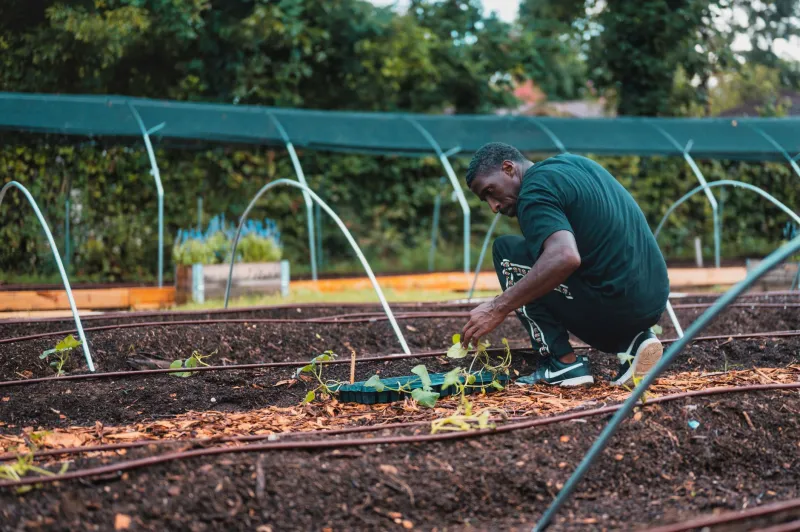
At first glance, a community garden is a modest intervention — a few raised beds, a water line, a plot of reclaimed earth. But in neighborhoods where fresh produce is scarce, social ties have frayed, and residents have long felt overlooked by public and private institutions alike, that modest intervention can quietly set off a chain of consequences that no spreadsheet fully anticipates.
Foundations across the United States are beginning to document what many longtime community organizers have understood for years: funding a single garden in the right place, at the right moment, can reshape the social and physical landscape of an entire ZIP code.
A Harvest of Data
The evidence base for community gardens as multi-dimensional development tools has grown considerably over the past decade. Research published through university extension programs and nonprofit research arms consistently shows that residents living within half a mile of an active community garden report meaningfully higher fruit and vegetable consumption than those without nearby access. In cities where food deserts overlap with concentrated poverty — Detroit, Baltimore, and stretches of rural Appalachia among the most well-documented — this dietary shift carries direct implications for long-term public health costs.
In Detroit, where decades of disinvestment left thousands of vacant lots scattered across the city's east side, neighborhood-based gardens funded through a combination of local foundations and community development financial institutions have contributed to measurable reductions in household food expenditures. Families participating in organized plot-sharing programs have reported saving between $400 and $600 annually on grocery costs — a figure that, while modest in isolation, represents a meaningful margin for households operating near the poverty line.
Baltimore's network of community gardens, many of them seeded by philanthropic grants and sustained by resident stewardship, tells a similar story. Beyond the produce itself, city health department data has pointed to reduced emergency room visits related to diet-sensitive conditions in zip codes with active garden programming, though researchers are careful to note that gardens represent one thread in a broader fabric of interventions.
The Mental Health Dimension
What surprises many funders — and what rarely appears in initial grant proposals — is the degree to which community gardens function as mental health infrastructure.
The mechanisms are not mysterious. Regular contact with soil and growing things carries well-documented psychological benefits, from reduced cortisol levels to improved mood regulation. But the mental health returns of a community garden extend beyond the horticultural. They are fundamentally social.
In food-insecure neighborhoods, isolation is often as pressing a concern as hunger. Residents who lack reliable transportation, who work multiple jobs, or who carry the accumulated weight of chronic stress frequently describe their communities as places where neighbors no longer speak. A garden changes the geometry of daily life. It creates a reason to be outside, a shared task, a common language.
In rural Appalachian communities where foundation-funded gardens have been established through partnerships with local health departments, coordinators have observed what one program director described as "the coffee shop effect" — a gathering point where people who would otherwise remain strangers begin to exchange seeds, stories, and eventually, assistance. Elderly residents who had grown increasingly homebound began appearing regularly. Young parents found informal childcare support. The garden became, in effect, a node of social infrastructure that no single-purpose intervention could have replicated.
Academic literature on the subject increasingly uses the language of "social prescribing" — the idea that structured opportunities for community participation can serve as legitimate complements to clinical mental health care. Community gardens, in this framing, are not merely agricultural projects. They are therapeutic environments with a harvest attached.
Youth, Pride, and the Long Arc
Perhaps the most consequential — and least immediately visible — returns on a community garden investment arrive through the children who grow up tending them.
Youth engagement programs built around garden stewardship have demonstrated consistent results in areas including school attendance, academic performance, and what researchers term "civic identity" — a young person's sense of belonging to and responsibility for the place where they live. In communities where institutional neglect has eroded trust in public life, the act of planting something and watching it grow carries a particular kind of weight. It is, at its core, an act of faith in the future.
Foundations that have taken a long view of their garden investments report outcomes that emerge years after the initial grant. Young people who participated in garden programming as children have returned as adult volunteers, as organizers, and in some cases as the next generation of community leaders. The garden becomes a point of origin — a place that shaped how someone understood their own capacity to contribute.
This generational continuity is difficult to quantify and nearly impossible to predict at the time of initial funding. It is precisely the kind of return that a narrow, outcomes-focused grant framework tends to miss.
What Foundations Must Understand
None of this is to suggest that a community garden is a sufficient response to food insecurity, mental health need, or neighborhood disinvestment. It is not. The conditions that create food deserts — inequitable land use policy, the retreat of grocery retailers from low-income markets, wage stagnation — require structural interventions that no plot of vegetables can address alone.
What community gardens represent, at their best, is a catalytic investment: one that activates resident agency, builds social capital, and creates conditions in which other forms of community development become more possible. Foundations that have paired garden funding with complementary investments in workforce development, affordable housing, and youth programming consistently report stronger overall outcomes than those treating green space as a standalone initiative.
The practical implications for philanthropic strategy are meaningful. Funders considering place-based investments would do well to resist the impulse to measure garden programs solely by pounds of produce harvested or number of plots assigned. The more durable metrics — changes in social connectedness, shifts in neighborhood perception, the emergence of new community leadership — take longer to surface and require a different kind of listening.
Building Something That Lasts
At Lunt Foundations, the conviction that guides our work is straightforward: communities are not problems to be solved from the outside. They are living systems with existing strengths, and the most effective philanthropic investments are those that recognize and amplify what is already present.
A community garden, when funded thoughtfully and governed by the residents it serves, does exactly that. It takes something that was dormant — a vacant lot, an untapped network of neighbors, a collective hunger for something better — and gives it a place to take root.
The vegetables are real. The savings are real. The friendships, the improved health outcomes, the young person who learns for the first time that their neighborhood is worth caring for — these are real as well. They are simply harder to see from a distance.
That is precisely why they require the sustained attention, and the patient capital, of foundations willing to invest in what cannot always be measured at harvest time.