Learning to Listen: How a New Wave of Fellowship Programs Is Redefining Foundation Leadership

A Different Kind of Qualification
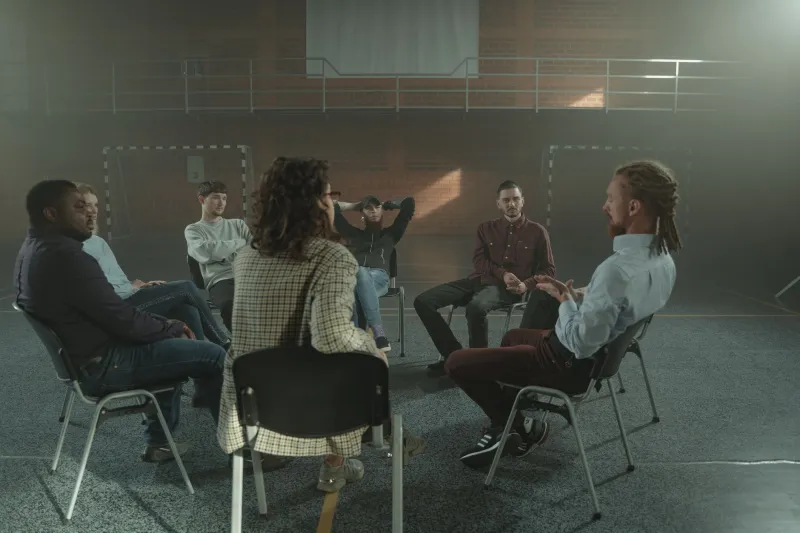
When a major community foundation in the Pacific Northwest began its search for a new program director two years ago, the hiring committee made an unusual decision. Rather than prioritizing candidates with traditional credentials — graduate degrees in public administration, years of grant management experience, fluency in evaluation frameworks — they weighted something harder to assess: the demonstrated ability to sit in a room with community members, say very little, and genuinely change their mind based on what they heard.
Finding candidates who possessed that quality, the committee discovered, was considerably more difficult than finding candidates with impressive resumes.
This experience is not unique. Across the philanthropic sector, foundation leaders are confronting a growing recognition that the skills required to do community-centered grantmaking well are not the skills that conventional training pathways produce. And as foundations increasingly commit to equity-driven, community-responsive approaches to their work, the gap between the leaders they have and the leaders they need is becoming impossible to ignore.
What Traditional Training Gets Wrong
The dominant pathways into foundation leadership — graduate programs in nonprofit management, public policy, or social work, followed by years of program coordination and grant administration — are not without value. They produce professionals who can manage budgets, navigate governance structures, write persuasive funding proposals, and speak fluently in the language of impact measurement.
What they rarely produce is leaders who are genuinely comfortable with uncertainty, who can hold space for community voices that challenge institutional assumptions, or who know how to recognize when the right answer is to follow rather than lead.
The problem is partly structural. Most nonprofit management curricula are built around organizational effectiveness — how to run a mission-driven entity efficiently and accountably. They are less equipped to teach the relational and adaptive capacities that community-centered philanthropy demands: deep listening, cultural humility, the willingness to be wrong, and the ability to navigate the inherent power imbalance between a funder and the communities it serves.
"We train people to be competent administrators," observed one longtime philanthropy educator who has spent years developing curriculum for foundation staff. "We are much less practiced at training people to be humble partners. Those are genuinely different skill sets, and conflating them has cost the sector a great deal."
The Fellowship Model as an Alternative Pathway
In response to this gap, a growing number of foundations and philanthropic networks across the United States have begun investing in fellowship and apprenticeship programs designed to cultivate a different kind of foundation leader — one shaped less by institutional credentialing and more by sustained, structured immersion in community life.
These programs vary considerably in design, but they share several common features. They prioritize candidates from the communities that philanthropy most often serves, recognizing that lived proximity to a problem is a form of expertise that no degree program can replicate. They structure learning around relationship-building rather than technical skill acquisition. And they build in extended periods of reflective practice, asking participants to examine not just what they are doing but why — and whose interests their decisions ultimately serve.
One such program, based in the Mid-Atlantic region, places emerging foundation leaders in twelve-month residencies with community organizations rather than with foundations themselves. The deliberate inversion is instructive. By positioning participants as learners within community-based organizations, rather than as emerging authorities within philanthropic institutions, the program forces a fundamental recalibration of perspective.
"When you spend a year on the other side of the grantmaking relationship, you stop seeing funding decisions as purely technical exercises," said one fellowship alumna who now leads a regional foundation's community investment portfolio. "You understand viscerally what it costs an organization when a funder changes priorities, or when a grant comes with conditions that don't reflect how the work actually happens. That understanding stays with you."
Listening as a Learnable Skill
Perhaps the most significant contribution of these emerging fellowship models is their insistence that listening — genuine, disciplined, transformative listening — is not a personality trait but a learnable professional skill.
This reframing matters. In conventional leadership development, listening is often treated as a soft competency, acknowledged in passing before the curriculum moves on to strategy, management, and measurement. In community-centered philanthropy, it is the foundational practice on which everything else depends.
The foundations doing this work most effectively are building listening into the structural rhythms of their institutions — not as a periodic community engagement exercise, but as an ongoing organizational practice. They are hiring leaders who have demonstrated the capacity to be genuinely changed by what they hear, not merely to incorporate community input into decisions that have already been made.
This requires, among other things, a willingness to recruit from outside the traditional philanthropic pipeline. Many of the most effective community-centered foundation leaders working today did not begin their careers in philanthropy. They came from community organizing, teaching, social work, and the arts. They brought with them a fluency in community relationships that no formal credential had given them — and that no amount of grant management experience could fully substitute for.
Building the Pipeline Intentionally
The leadership pipeline challenge in philanthropy is not simply a talent problem. It is a structural one, rooted in hiring practices, compensation models, and institutional cultures that have historically made foundation careers more accessible to those with elite educational backgrounds and professional networks than to those with deep community roots.
Addressing it requires deliberate action at multiple levels. It means redesigning job descriptions to value community knowledge as a credential. It means building compensation structures that make foundation careers viable for candidates who do not arrive with financial cushions. And it means creating internal cultures that genuinely welcome the discomfort of being challenged by people who know things that institutional training never taught.
At Lunt Foundations, our commitment to building communities and changing lives begins with a recognition that the people leading that work must themselves be shaped by the communities they serve. The next generation of foundation leaders will not be defined by the sophistication of their evaluation frameworks. They will be defined by their capacity to earn trust, sustain relationships, and remain genuinely open to being taught by the people they are trying to support.
The Work of Becoming
Leadership development in philanthropy, at its best, is not a training program. It is an ongoing process of becoming — of developing the relational depth, cultural fluency, and institutional courage that community-centered work demands.
The fellowship and apprenticeship models emerging across the country are not a complete answer to the sector's leadership pipeline challenges. But they represent something important: a growing recognition that the skills nobody trains for may be the ones that matter most. And a willingness, at last, to begin training for them.