Neighbor by Neighbor: How Mutual Aid Networks Are Quietly Reweaving America's Frayed Social Fabric
When Crisis Became Catalyst
In the spring of 2020, as American institutions struggled to respond to an unprecedented public health emergency, something unexpected emerged from the uncertainty. Neighbors — many of whom had never exchanged more than a passing wave — began organizing. Spreadsheets circulated through neighborhood Facebook groups. Hand-lettered flyers appeared on telephone poles. Text chains formed between strangers who shared only a ZIP code and a willingness to help.
Mutual aid, as a concept, is hardly new. Immigrant communities, labor unions, and Black fraternal organizations have practiced formalized neighbor-to-neighbor support for well over a century. But the COVID-19 pandemic compressed years of civic disengagement into a single, clarifying moment — and what emerged from that compression has proven far more durable than most observers anticipated.
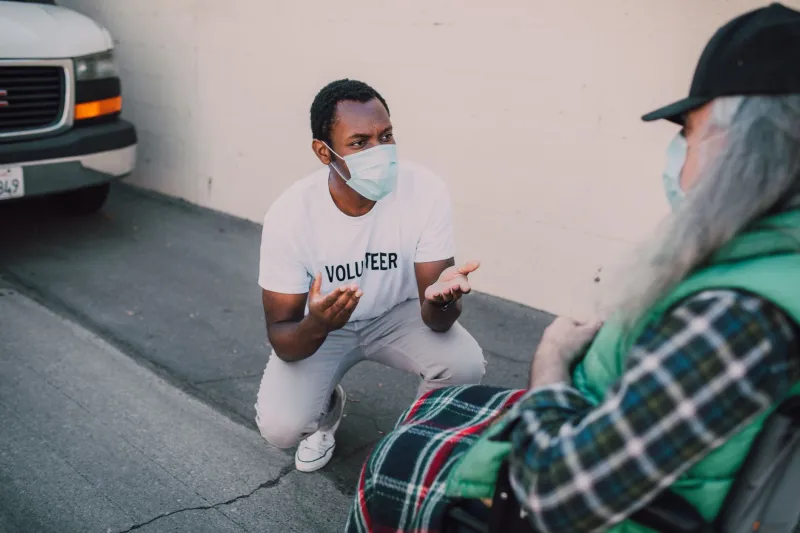
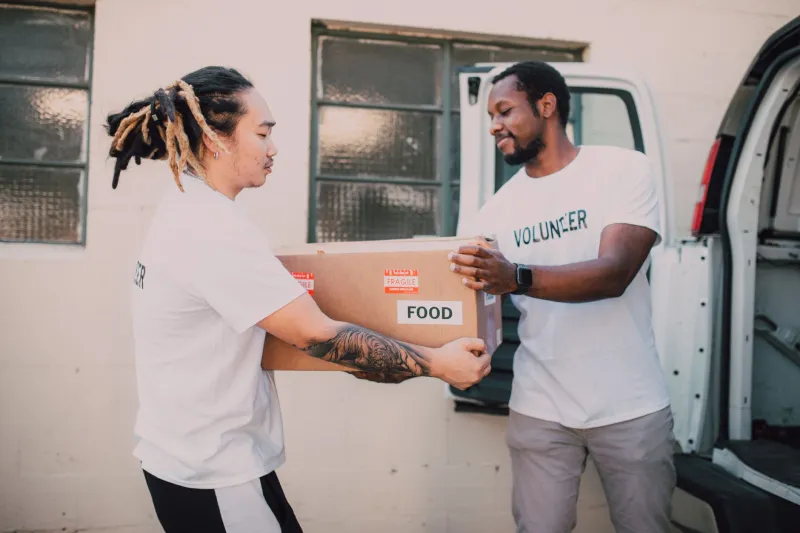
Today, thousands of mutual aid networks operate across the United States, many of them still anchored in the same informal structures that gave them birth. They deliver groceries to homebound elderly residents, coordinate emergency rent assistance, distribute surplus produce from community gardens, and provide translation services to immigrant families navigating complex bureaucracies. They operate on shoestring budgets, run largely by volunteers, and governed — if that word even applies — by consensus rather than hierarchy.
What they are accomplishing, quietly and without fanfare, is nothing less than a reconstruction of community infrastructure from the ground up.
Stories from the Field
In the South Side of Chicago, a network called Neighbors for Neighbors began in April 2020 with a single shared document and a handful of volunteers. By the end of that first year, the group had connected more than 1,200 households with food, medication pickups, utility assistance, and childcare coordination. Four years later, it still operates — and has expanded its scope to include a community tool library, a free legal clinic held monthly at a local church, and a peer mental health support circle.
In rural eastern Kentucky, where the nearest food bank can be a forty-minute drive and social services are chronically underfunded, a mutual aid collective born from the aftermath of catastrophic 2022 flooding has become the de facto emergency response network for three counties. Volunteers coordinate through a simple group messaging app, dispatching chainsaws, water pumps, and home-cooked meals with a speed that formal disaster relief organizations have openly acknowledged they cannot match at the hyperlocal level.
On the outskirts of Phoenix, Arizona, a network serving a predominantly Latino community has evolved into a trusted bridge between undocumented residents and essential services — a role that requires a degree of trust that no government agency could realistically cultivate. Participants describe the network not as a charity, but as a community of equals in which everyone both gives and receives over time.
These are not outliers. They are representative of a pattern repeating itself in hundreds of communities across the country, from mid-sized Midwestern cities to Pacific Northwest suburbs to Gulf Coast fishing villages.
The Tension Between Growth and Authenticity
As mutual aid networks have matured, many have confronted a defining question: should they formalize?
The pressure to do so is real. Formal nonprofit status unlocks access to foundation grants, provides legal protection for organizers, and offers a structure that can survive the inevitable turnover of volunteer leadership. Several networks have made this transition successfully, building organizational capacity without sacrificing the relational culture that made them effective in the first place.
But formalization carries genuine risks. The moment a mutual aid network begins writing grant reports and managing restricted funding, it begins — however subtly — to orient itself toward funders rather than neighbors. Accountability structures shift. Decision-making concentrates. The radical horizontality that allowed these networks to move quickly and earn trust becomes harder to maintain.
Organizers who have navigated this tension often speak of it in terms of identity. "We're not a nonprofit that does mutual aid," one Chicago organizer explained at a recent community development conference. "We're neighbors who take care of each other. The paperwork is a tool. It can't become the point."
This distinction matters enormously — and it is one that the broader philanthropic community would do well to internalize.
What Traditional Philanthropy Can Learn
For established foundations, the rise of mutual aid networks presents both a challenge and an invitation.
The challenge is one of humility. These networks have demonstrated that communities often know their own needs better than any outside institution — and that trust, built through consistent presence and genuine reciprocity, is a form of infrastructure that no grant can purchase directly. The speed and precision with which mutual aid networks deploy resources routinely outpaces that of larger organizations burdened by due diligence requirements and programmatic silos.
The invitation is to reconsider the nature of partnership. Rather than positioning mutual aid networks as grantees to be evaluated and monitored, forward-thinking foundations are exploring what it means to serve as genuine partners — providing unrestricted operating support, offering back-office capacity without demanding programmatic control, and treating community knowledge as an asset equal in value to institutional expertise.
This approach requires a reorientation of power that is uncomfortable for many traditional philanthropic actors. It demands that foundations ask not only "what are these communities lacking?" but "what have these communities already built, and how can we support it without distorting it?"
Some foundations have begun to answer that question well. Trust-based philanthropy models, which prioritize multi-year unrestricted grants and minimal reporting burdens, have gained significant traction in recent years — in part because mutual aid networks have made the case, through sheer results, that community-rooted organizations deserve to be trusted.
The Deeper Meaning of Mutual Aid
Beyond the practical outcomes — the meals delivered, the rents paid, the crises averted — mutual aid networks are generating something that social scientists have long identified as essential to community health: social cohesion.
In a nation marked by deepening political polarization, geographic sorting, and the erosion of civic institutions, the experience of giving and receiving help from a literal neighbor is quietly countercultural. It rebuilds the relational tissue of community life in ways that no policy initiative or philanthropic program can manufacture.
Participants in mutual aid networks consistently describe a transformation in how they relate to their neighbors — a shift from strangers sharing a street address to members of something that feels, unmistakably, like a community. That transformation is, arguably, the most significant outcome these networks produce.
At Lunt Foundations, we believe that building communities and changing lives are not separate endeavors. The evidence emerging from mutual aid networks across this country suggests that they are, in fact, the same endeavor — and that the most durable social change often begins not with a strategic plan, but with one neighbor asking another: what do you need, and how can I help?
The quiet revolution is already underway. The question for the philanthropic sector is whether it will find ways to support that work without inadvertently diminishing it.