Planting the Seed: How a Single Strategic Grant Can Echo Through a Community for Decades
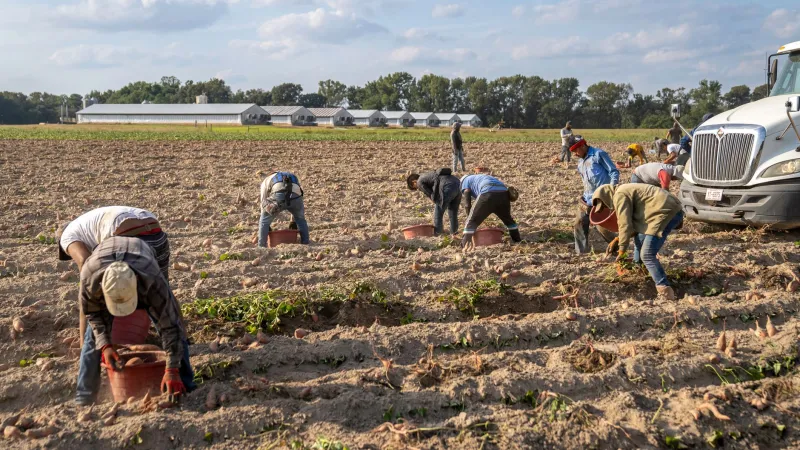
In the world of philanthropy, there is a persistent temptation to measure impact by dollar amounts. The larger the grant, the logic goes, the greater the good. Yet some of the most consequential investments in American community development have been surprisingly modest — not in ambition, but in their initial dollar figure. What made them transformative was not their size. It was their timing, their placement, and the soil into which they were sown.
The story of Harlan County, Kentucky — and a $75,000 workforce training grant awarded in 2003 — offers one of the clearest illustrations of this principle in recent memory.
 Photo: Harlan County, Kentucky, via www.coloryourname.net
A Community at a Crossroads
By the early 2000s, Harlan County had spent nearly two decades absorbing the slow collapse of its coal economy. Unemployment hovered well above the state average. Young people were leaving at an alarming rate, and those who remained faced limited pathways into stable employment. Local government resources were strained, and the social fabric — churches, civic organizations, small businesses — was fraying under the pressure.
Into this environment, a regional community foundation made a decision that, at the time, appeared almost unremarkable. It awarded a $75,000 grant to a local nonprofit to launch a youth workforce readiness program. The program was designed to serve 30 participants in its first cohort, offering vocational skills training, financial literacy education, and mentorship from local business owners. There were no guarantees. There was simply a carefully considered bet on human potential.
The First Ripple: Employment and Earnings
Within three years of the program's launch, 24 of the original 30 participants had secured full-time employment within the region. That figure alone would have justified the investment. But what the foundation's program officers noticed was something more interesting: participants were not simply filling existing jobs. Several had used the financial literacy component of the program to open small businesses — a catering operation, a landscaping company, a small auto repair shop.
Those businesses, in turn, hired locally. By 2008, five years after the initial grant, the program had trained three additional cohorts and was operating on a combination of renewed foundation support and, critically, revenue generated through a fee-for-service arrangement with regional employers who paid modest fees to recruit from the program's graduating classes. The original grant had, in effect, helped create a self-sustaining pipeline.
Housing Stability Follows Economic Stability
The connection between economic mobility and housing stability is well-documented in community development research, but it rarely announces itself in dramatic fashion. In Harlan County, the shift was gradual but measurable. As program graduates entered stable employment, local housing data began to reflect a quieter trend: mortgage delinquency rates in the neighborhoods where graduates were concentrated declined noticeably between 2005 and 2012.
A local community development financial institution — itself supported by a separate but related strand of regional foundation investment — noted an uptick in first-time homebuyer applications from individuals in the 25-to-34 age bracket, a demographic that had been largely absent from the local housing market for the better part of a decade. Families were staying. Homes were being maintained. Neighborhoods that had begun to show the physical signs of disinvestment — overgrown lots, deferred maintenance, vacant storefronts — started to stabilize.
None of this happened because of a single massive urban renewal project. It happened because people with stable incomes make different decisions about where and how they live.
Public Health as a Downstream Benefit
Perhaps the least anticipated consequence of the workforce program was its eventual intersection with public health outcomes. Research consistently shows that economic insecurity is one of the most powerful drivers of poor health — not merely because it limits access to care, but because the chronic stress of financial precarity has measurable physiological effects.
By 2015, public health researchers affiliated with a nearby university had begun tracking health metrics across several Appalachian counties. Their findings, published in a regional health policy journal, noted that communities with higher rates of stable youth employment showed lower rates of opioid-related emergency department visits among adults under 40. The correlation was not causative in isolation, but the pattern was consistent enough to draw attention.
The workforce program had not set out to address the opioid crisis. But by giving young people a foothold in the formal economy, it had quietly altered the conditions that make communities vulnerable to it.
The Multiplier Effect in Local Entrepreneurship
By 2020 — nearly two decades after the original grant — the program had trained more than 400 individuals. Forty-one program alumni had gone on to start businesses of their own. Several of those businesses had grown to employ between five and fifteen people. One graduate, who had completed the program's inaugural cohort at age 19, now operated a regional logistics company with a staff of 22 and an annual revenue that placed it among the county's mid-sized employers.
That same individual served on the board of the nonprofit that had trained him. He had personally mentored 11 younger participants through the program. The original investment had, in effect, produced its own philanthropic infrastructure — a network of people who understood, from lived experience, the value of strategic community investment and were now positioned to extend it.
What This Means for Strategic Philanthropy
The Harlan County example is not unique. Across the United States, community foundations and philanthropic organizations have documented similar patterns of compounding impact in contexts ranging from rural agricultural communities in the Mississippi Delta to post-industrial neighborhoods in the Great Lakes region. The common thread is not the sector — workforce, housing, education, health — but the strategic logic that guided the initial investment.
 Photo: Great Lakes region, via tmark.ru
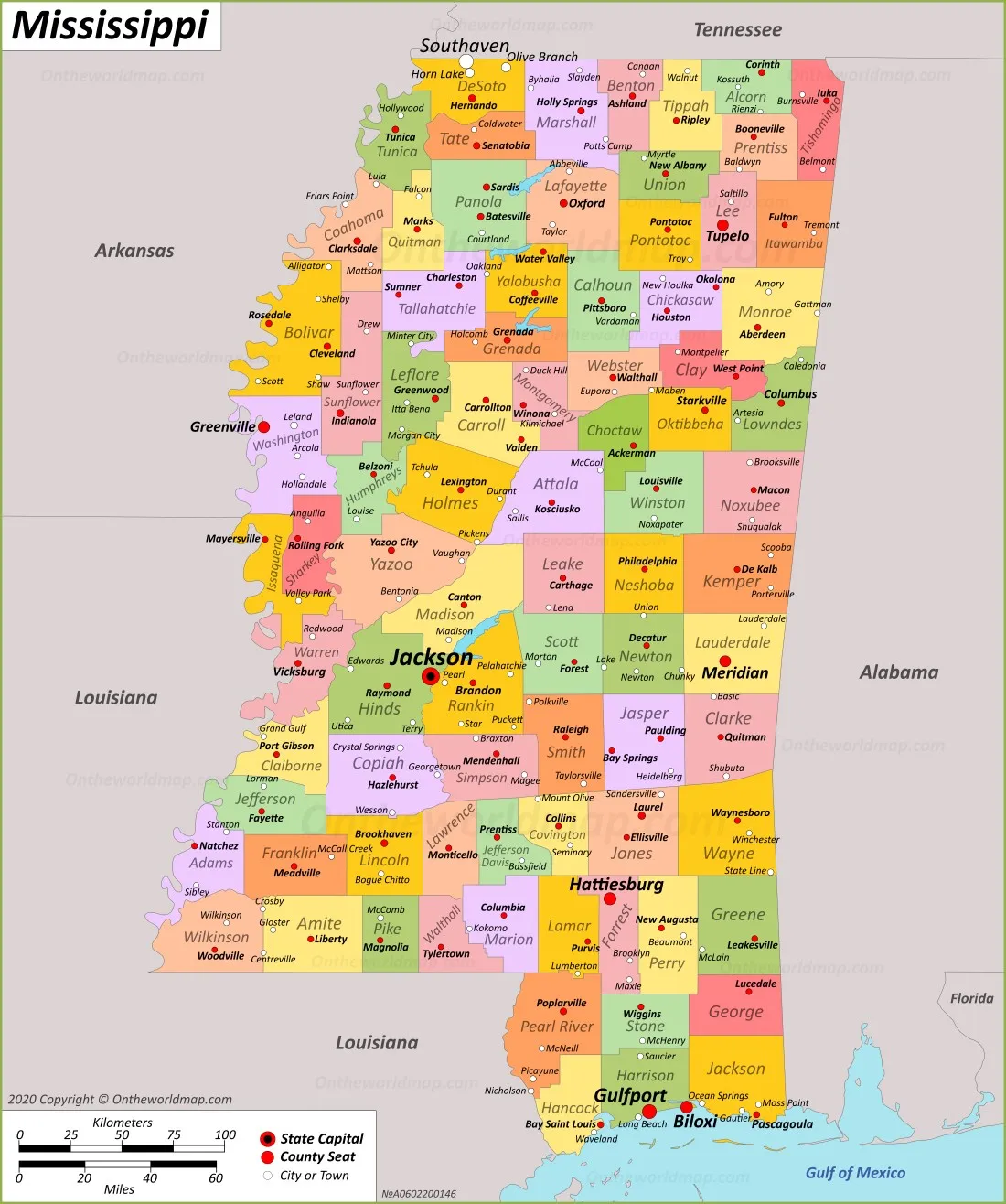 Photo: Mississippi Delta, via ontheworldmap.com
Effective community grants share several characteristics. They identify a genuine pressure point in the community's existing systems — a place where a targeted intervention can relieve strain and create new capacity. They invest in people rather than infrastructure alone, recognizing that human capital is the most durable form of community asset. And they are patient, structured to allow compounding effects to accumulate over years rather than demanding immediate, quantifiable returns.
For foundations considering where and how to deploy resources, the Harlan County story carries a clear message: the most consequential question is rarely how much to give. It is where, to whom, and toward what underlying logic.
Building for Generations
At Lunt Foundations, our commitment to community development is grounded in exactly this understanding. Transformation does not require a single dramatic intervention. It requires the discipline to identify the right seed, prepare the soil carefully, and trust that what grows — over years, over decades — will be worth the wait.
The ripple effect is real. But it begins with the willingness to cast the stone.