When the Dreamer Departs: Protecting Philanthropic Vision Across Generations

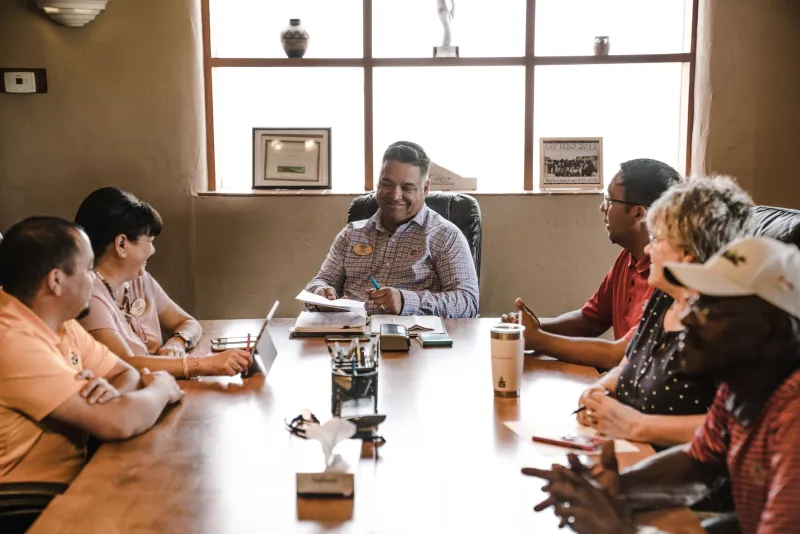
In a modest conference room at a community development organization in rural Appalachia, a program director sat across from a stack of correspondence she had no idea how to answer. The letters were from families enrolled in a multi-year scholarship program—a program that had been funded exclusively through a donor-advised fund established by a local businessman who had died eight months earlier. His estate was in probate. His family had different priorities. The fund's successor advisors had not yet been designated. And the students waiting for their second-year disbursements had already enrolled.
The program director's situation was not unusual. It was, in fact, a compressed illustration of one of American philanthropy's most persistent and underexamined structural vulnerabilities: the dependence of consequential community work on the continued presence—and continued intention—of a single individual.
The Scale of the Problem
Donor-advised funds now represent one of the largest and fastest-growing vehicles for charitable giving in the United States. According to data compiled by the National Philanthropic Trust, contributions to donor-advised funds have grown dramatically over the past decade, with assets now totaling hundreds of billions of dollars. Private foundations, meanwhile, number in the tens of thousands, many of them closely held family entities whose governance structures were designed around the preferences and personalities of their founders.
When those founders die—or, in some cases, when they simply lose interest, develop cognitive decline, or experience family conflict—the communities that had organized their futures around anticipated support can face sudden, disorienting discontinuity. Multiyear grants may go unfulfilled. Capacity-building investments made in anticipation of continued funding become liabilities. Staff hired to manage growing programs find themselves without the resources to sustain them.
The problem is not confined to small or informal giving arrangements. Even well-established foundations can suffer from what researchers have begun calling founder dependency syndrome—an organizational condition in which institutional culture, strategic direction, and key relationships are so thoroughly identified with a single individual that the entity lacks the internal architecture to adapt when that person is no longer present.
Why Succession Planning Remains Rare
Given the evident risks, it is worth asking why so few foundations develop robust succession frameworks before they are urgently needed. The answers are both structural and deeply human.
On the structural side, private foundations and donor-advised funds face limited external pressure to plan for continuity. Unlike publicly traded companies or regulated nonprofits with government contracts, most giving vehicles have no external constituency with the standing or the incentive to demand succession documentation. Boards of closely held foundations are often composed of family members or close associates who share the founder's reluctance to contemplate mortality in institutional terms.
On the human side, the reluctance is more straightforward. Founders frequently experience their philanthropic work as an extension of their personal values, relationships, and life's meaning. Planning for what happens after their death requires confronting that death directly—and accepting that the work will continue, possibly in altered form, without them. For many donors, this is not an abstraction but a genuinely difficult emotional proposition.
The Frameworks That Work
Foundations that have successfully navigated founder transitions share several structural characteristics worth examining in detail.
Values documentation, not just strategic plans. Effective succession frameworks begin not with operational procedures but with a rigorous effort to articulate the founder's underlying values in language that can guide future decision-making without requiring the founder's presence. This is meaningfully different from a strategic plan, which typically describes what an organization intends to do. A values document describes why—and in doing so, provides future stewards with the interpretive framework they need to make judgment calls the founder did not anticipate.
Relationship transfer, not just asset transfer. Some of the most consequential assets a founder holds are relational: trust with community leaders, informal influence in local networks, personal credibility with grantees who have worked with the foundation for years. Foundations that plan deliberately for succession identify these relational assets explicitly and design transition processes that introduce successor leadership to key community partners while the founder is still present and able to facilitate those introductions.
Governance diversification before it is needed. Foundations that wait until a founder's death to diversify their boards frequently find that the new voices they add lack the institutional context to exercise meaningful authority. Foundations that introduce independent board members—particularly community members with no prior relationship to the founder—during the founder's active tenure create governance structures capable of genuine continuity.
Explicit contingency provisions in donor-advised fund agreements. For donors using commercial donor-advised fund sponsors, the establishment of clear successor advisor designations, along with written guidance documents that articulate grantmaking priorities, can provide meaningful protection for communities that have come to depend on that support. While no legal mechanism can compel a successor advisor to honor a predecessor's intentions, the presence of explicit documentation significantly raises the moral and relational stakes of deviation.
The Community's Role in Demanding Continuity
Organizations that receive multi-year philanthropic commitments are not passive participants in this dynamic. They have both the standing and, arguably, the responsibility to raise succession questions with their funders—even when doing so feels uncomfortable.
In practice, grantee organizations rarely raise these concerns, for understandable reasons. Questioning a donor's mortality, or the durability of their commitment, can feel presumptuous or even offensive. But the alternative—accepting multi-year support without any understanding of what happens if the donor's circumstances change—exposes communities to precisely the kind of discontinuity that derails long-term programs.
Some community foundations have begun offering facilitated succession planning services to donor-advised fund holders as a standard component of their donor engagement programs. This framing—succession planning as a gift to the community rather than a concession to mortality—has proven more effective at encouraging participation than direct conversations about estate planning.
Building Legacies That Outlast Their Authors
The most enduring philanthropic legacies in American history share a common characteristic: they were designed with enough structural integrity to absorb the loss of their founders without losing their essential character. This is not an accident. It is the result of deliberate, sometimes uncomfortable planning undertaken while the founder was still present to shape the outcome.
At Lunt Foundations, we understand that the most meaningful gift a philanthropic leader can leave is not simply a pool of capital. It is a set of values, relationships, and governance structures capable of translating that capital into sustained community benefit long after the original dreamer has departed. The communities that depend on this work deserve nothing less.