The Wisdom Already Present: How Philanthropy Is Learning to Follow Community Leadership
An Uncomfortable Arrival
Imagine a foundation program officer arriving in a rural Mississippi Delta community with a carefully prepared presentation: a proven model, a theory of change, a timeline, and a budget. The slides are polished. The data from comparable communities is compelling. The intentions are genuine.
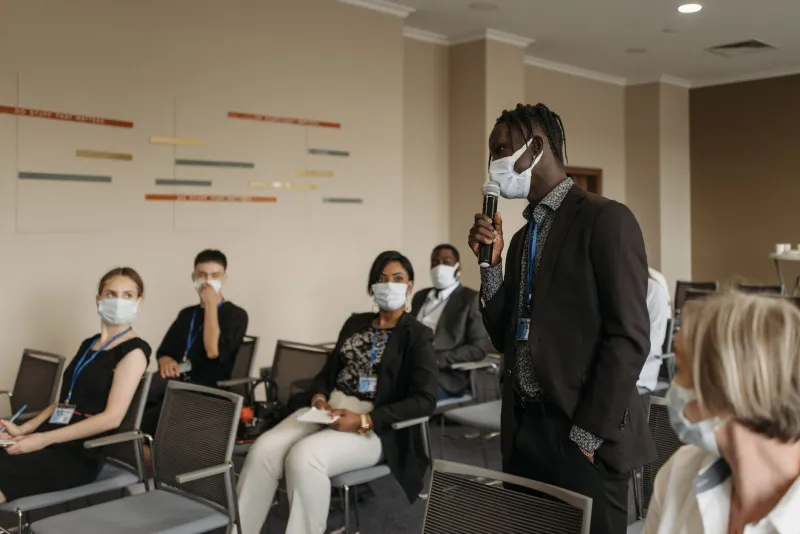
Now imagine what happens when a resident in the back row raises her hand and says, quietly but firmly: "We've been solving this problem our own way for thirty years. Did anyone think to ask us about that?"
This scene—or some version of it—has played out in communities across the United States with enough frequency that it has begun to reshape how a meaningful number of foundations approach their work. The emerging practice is sometimes called "listening-first philanthropy," sometimes "community-centered grantmaking," and sometimes simply "trust-based giving." The terminology varies. The underlying premise does not: communities are not problems to be solved from the outside. They are reservoirs of knowledge, resilience, and capacity that philanthropy is only beginning to learn how to recognize.
The Architecture of the Old Model
The conventional philanthropic model is built on a particular assumption about expertise. Foundations—staffed by researchers, policy analysts, and program officers trained in elite institutions—identify a problem, commission studies, develop an intervention, and deploy resources to implement it. Communities are the sites of this intervention. Residents are, at best, consulted. At worst, they are simply recipients.
This model has produced genuine good. Certain evidence-based interventions, replicated carefully across diverse contexts, have improved outcomes in measurable ways. Vaccine distribution programs, early childhood literacy initiatives, and workforce training pipelines have all benefited from rigorous, externally designed frameworks.
But the model carries a structural blind spot. It systematically undervalues what communities already know. It treats the absence of formal documentation as the absence of knowledge. And it tends to produce programs that work adequately in the short term but fail to take root because they were never truly owned by the people they were meant to serve.
When funding cycles end, externally designed programs frequently collapse—not because the model was flawed, but because no one in the community had a stake in sustaining it.
What Listening Actually Requires
The shift toward listening-first philanthropy sounds, in the abstract, like a modest adjustment. In practice, it requires a fundamental reorientation of institutional culture.
Organizations that have made this transition describe a process that begins long before any grant is awarded. Program officers spend extended time in communities—not presenting, not facilitating focus groups designed to validate predetermined conclusions, but genuinely listening. They attend community events. They sit in churches and barbershops and school parking lots. They ask open questions and resist the urge to steer answers toward familiar frameworks.
The Headwaters Foundation in Minnesota, which explicitly centers Indigenous and communities of color in its grantmaking, has formalized this approach by training program staff to enter community conversations without any agenda beyond understanding. Staff members are evaluated, in part, on their ability to surface community knowledge that the foundation did not previously possess.
This is harder than it sounds. Program officers are hired, typically, because they have expertise. Asking them to set that expertise aside—to become learners rather than authorities—creates genuine institutional discomfort. It also raises difficult questions about accountability: if the foundation is not defining the intervention, how does it evaluate the investment?
Solutions That Survive
The evidence emerging from listening-first grantmaking is beginning to answer that question. Across multiple contexts, community-generated solutions demonstrate greater durability than externally designed programs, even when they are less polished in their initial presentation.
In South Los Angeles, community health workers who were already operating informal networks of mutual support were connected with philanthropic resources that allowed them to formalize and expand their existing practices—rather than being replaced by a clinic-based model imported from another city. Five years later, the network remains active and has expanded its reach without continued foundation involvement.
In Appalachian Ohio, a foundation that had previously funded workforce development programs designed by urban consultants shifted its approach and asked residents what barriers to employment actually looked like from the inside. The answers—transportation, childcare timing, and the social stigma attached to certain training programs—pointed toward solutions that no external assessment had identified. The resulting interventions, designed by residents, achieved enrollment and retention rates that significantly exceeded the previous model's performance.
The pattern, observed across diverse geographies and issue areas, is consistent: solutions that emerge from within communities carry a legitimacy and a sustainability that externally designed programs rarely achieve.
The Power Question Philanthropy Cannot Avoid
Listening-first philanthropy is not only a methodological shift. It is a power shift—and that distinction matters enormously.
When foundations define the problem, design the solution, and set the terms of evaluation, they hold nearly all of the power in the philanthropic relationship. Community organizations become implementers of someone else's vision, accountable to metrics they did not choose, executing strategies they may privately doubt. This arrangement is so deeply embedded in American philanthropy that many practitioners on both sides of the relationship have ceased to notice it.
The listening-first movement makes that power arrangement visible—and asks foundations to voluntarily relinquish some of it. For institutions that have organized themselves around the authority of their own expertise, this is genuinely disorienting. It requires board members and senior leadership to accept that their knowledge, while valuable, is incomplete. It requires ceding control over outcomes that funders have traditionally felt entitled to define.
Not every foundation is prepared to do this. The ones that are, however, are finding that the relinquishment of control does not diminish their impact. In most cases, it amplifies it.
A Different Kind of Foundation
At Lunt Foundations, the aspiration to build communities and change lives is not a passive one. It carries an implicit obligation to ask, continuously and honestly, whose vision of community we are building toward—and whose definition of change we are advancing.
The growing practice of listening-first philanthropy offers a partial answer. It suggests that the most durable foundations are not those that arrive with the best solutions, but those that create the conditions for communities to implement their own. It asks us to trust that the wisdom necessary for genuine transformation is not housed in our institutions alone.
That is a harder posture to maintain than certainty. It is also, the evidence increasingly suggests, a far more effective one.