The Year Between: How Funded Gap Programs Are Opening New Doors for First-Generation Students

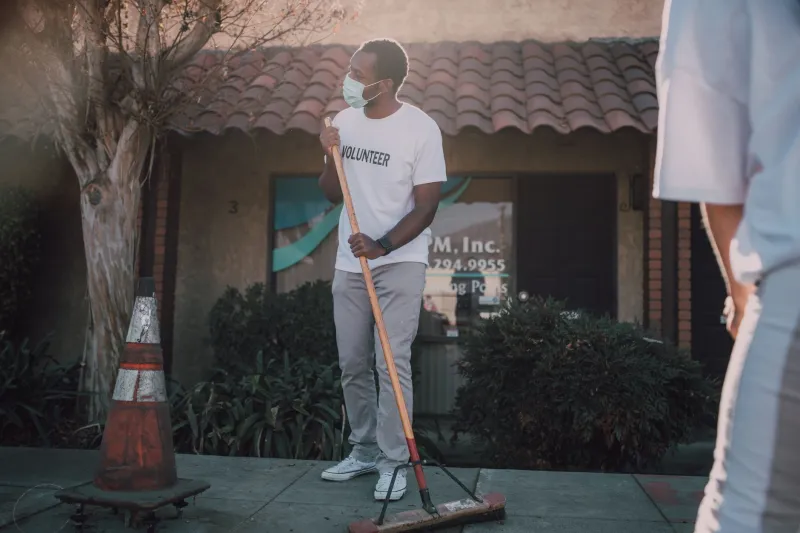
Photo by Photo by Van Tay Media on Unsplash on Unsplash
The Opportunity Hidden in a Pause
The conventional script for low-income students who excel academically has long been a narrow one: graduate high school, apply to college, enroll immediately, persist through financial and academic challenges with minimal support, and hope that a degree translates into economic mobility. It is a script that has served some students well. For many others, it has produced a different outcome—early withdrawal, crippling debt, and a return to circumstances not meaningfully different from those they started in.
A quieter and less celebrated pathway is beginning to attract serious philanthropic attention. Gap-year programs designed specifically for first-generation and low-income students are emerging across the United States, offering something that traditional college preparation rarely provides: time. Time to develop practical skills, to encounter the world beyond one's immediate neighborhood, to receive sustained mentorship, and to arrive at the next stage of life with a clearer sense of direction and a stronger foundation for success.
The evidence gathering around these programs is modest but growing, and it is beginning to challenge some of the sector's most deeply held assumptions about what it means to invest in young people's futures.
Why the Traditional Pipeline Fails Many Students
The phrase "college pipeline" implies a smooth and continuous flow. For first-generation students from low-income households, the reality is considerably more turbulent. Research from the National Student Clearinghouse consistently shows that students who are the first in their families to pursue higher education face dropout rates significantly higher than their more affluent peers—not primarily because of academic unpreparedness, but because of financial stress, social isolation, and a lack of the informal knowledge about how institutions work that more privileged students absorb from their environments before ever setting foot on a campus.
Many of these students arrive at college without having had meaningful exposure to professional environments, without having developed the self-advocacy skills that college life demands, and without any personal network that might help them navigate the inevitable obstacles ahead. They are, in a very real sense, asked to compete in an environment for which they have not been equipped—not through any failure of their own, but through a structural gap in the opportunities available to them.
Gap-year programs designed for this population attempt to fill precisely that gap. Rather than sending students directly from high school into an institution that was not designed with them in mind, these programs offer an intentional intermediate experience—one that builds the practical, social, and emotional capacities that determine whether a young person thrives or stumbles once formal education begins.
What These Programs Actually Look Like
The design of philanthropically-funded gap programs for low-income teens varies considerably, but several features appear consistently in those with documented outcomes.
Most combine structured skill-building with real-world work or service experience. Participants might spend several months in an internship at a local business, followed by a community service placement, followed by a period of intensive college and career readiness coaching. The sequencing is deliberate: each phase builds on the last, and participants are supported throughout by mentors who remain engaged across the full year rather than handing off responsibility at each transition.
Many programs also incorporate travel or cultural exposure as a core component—not as a luxury, but as a deliberate strategy for expanding the imaginative horizons of young people whose previous environments may have offered a limited view of what is possible. For a teenager who has rarely left their home city, spending time in a different region of the country, or working alongside peers from different backgrounds, can be genuinely transformative in ways that classroom instruction rarely replicates.
In Chicago, one foundation-supported program pairs high school graduates from the city's South and West sides with professional mentors for a full year of monthly meetings, career shadowing, and financial literacy coaching. Program data collected over five years shows that participants who complete the program enroll in college at rates comparable to the national average—and, critically, persist through their first year at rates significantly higher than similar students who did not participate. The program's directors attribute much of this persistence to the confidence and practical knowledge participants develop during their gap year, as well as to the ongoing mentor relationships that many carry into their college years.
The Philanthropic Case for Investing in the Interval
For foundations considering where to direct resources within the education space, gap-year programs represent a compelling but underutilized opportunity. The cost per participant is often lower than multi-year scholarship programs, and the return—measured in college persistence, career readiness, and long-term economic mobility—is increasingly well-documented.
Perhaps more importantly, these programs address a dimension of opportunity inequality that financial aid alone cannot resolve. Scholarships help students afford college. Gap-year programs help students arrive ready for it. Both are necessary. Neither is sufficient without the other.
There is also a community dimension to these investments that deserves recognition. Young people who spend their gap year engaged in local service and mentorship do not simply benefit themselves. They contribute to the neighborhoods that shaped them, often developing a sense of civic identity and responsibility that persists long after the program ends. The foundation that invests in one student's gap year may, over time, be investing in that student's future role as a community leader, a local employer, or a mentor to the next generation.
Redefining What Readiness Means
The growing interest in gap-year programs among philanthropic organizations reflects a broader and necessary evolution in how the sector thinks about educational equity. Readiness for college or career is not a fixed trait that students either possess or lack. It is a set of capacities—practical, relational, and psychological—that can be deliberately cultivated, given the right conditions and the right support.
For first-generation students, the year between high school and whatever comes next need not be a period of drift or delay. With intentional design and sustained philanthropic investment, it can be the most consequential year of a young person's life—the year in which the trajectory changes, the horizon expands, and the foundation for everything that follows is quietly, durably laid.