Beyond the Food Desert Label: Underwriting Grocery Access as Durable Community Infrastructure
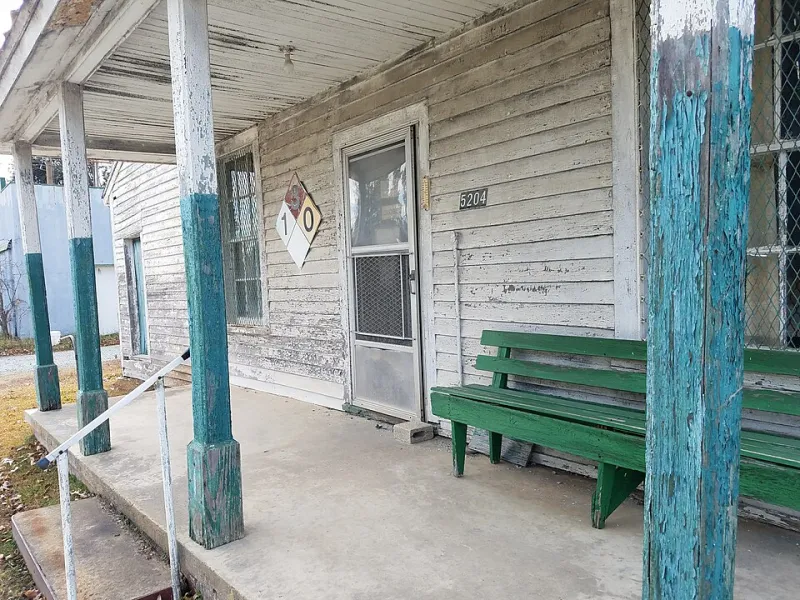
Photo: Nadia Murchison, CC BY-SA 4.0, via Wikimedia Commons
Few community institutions announce their departure as quietly as a grocery store. Shelves thin, refrigerated cases go dark, and one day a handwritten sign thanks customers for decades of loyalty. For a rural county or a low-income urban neighborhood, that closure is not merely an inconvenience. It lengthens trips to work and school, raises household costs, weakens local employment, and makes it harder for older residents and families without reliable cars to put food on the table.
Philanthropy has long funded food pantries, nutrition education, and farmers markets. Those efforts matter. But a growing number of foundations are asking a harder question: should food retail itself be treated as community infrastructure? If a grocery store is the only place in a neighborhood to buy fresh produce, redeem federal nutrition benefits, and access a pharmacy counter, then its disappearance is a structural problem. It deserves structural responses.
From Amenity to Infrastructure
Food retail is usually understood as a private business. In places with abundant supermarkets, that framing works. In places without them, the last grocery store behaves more like infrastructure: it shapes travel patterns, public health, property values, and the daily rhythm of a community. When it closes, the effects cascade through other systems.
Treating food retail as infrastructure does not mean treating it as a permanent charity ward. It means recognizing that access to affordable food has public consequences and that the capital needed to preserve it may not fit conventional commercial lending. Foundations can help fill gaps that markets and public programs leave behind, but they must do so with discipline.
Three Models, Three Risk Profiles
Most philanthropic experiments in food retail fall into three categories.
Community-owned markets give residents or a nonprofit a direct ownership stake. They can preserve access in places where no chain will operate, and they can build local accountability. But they also require retail expertise, strong governance, and realistic operating assumptions. Good intentions do not manage inventory, negotiate with distributors, or keep refrigeration running.
Mobile grocers bring food to neighborhoods through trucks, buses, or pop-up routes. They require less real estate and can adapt quickly. Yet they usually offer a limited selection and may not replace a full-service store. They are a bridge, not a foundation.
Small-retailer rescue funds provide grants or loans to independent grocers, cooperatives, or local entrepreneurs who might otherwise close. These funds can preserve existing businesses and jobs, but they demand rigorous underwriting. A rescue grant that keeps a weak operator alive without a path to viability may simply postpone closure while consuming scarce capital.
Each model has a different failure mode. Funders should match the instrument to the risk. Grants may be appropriate for predevelopment, market studies, and technical assistance. Loan guarantees and patient capital may fit working capital or ownership transitions. Equity-like investments may be necessary when a community group needs time to build a sustainable operation.
Where Philanthropic Capital Helps, and Where It Distorts
Philanthropic capital is most useful when it addresses a specific gap that prevents a viable project from proceeding. That might mean funding a market study, supporting an ownership transition, financing energy-efficient refrigeration, or helping a small grocer improve back-office systems. It can also help communities negotiate with distributors and plan for succession when a longtime owner retires.
The risks appear when philanthropy substitutes for a business model. Ongoing operating subsidies can mask weak demand, poor management, or a location that cannot support a full-service store. Funding a new market without considering the existing retailer down the road can divide a fragile customer base. Promising residents a permanent store without a realistic exit strategy can create expectations that no funder can meet.
Foundations should also be careful about the language they use. A food desert is a useful shorthand, but it can flatten very different local realities. Some neighborhoods lack any grocery store. Others have small markets with limited produce. Others have stores that are technically open but poorly stocked, unsafe, or unaffordable. The right intervention depends on which problem actually exists.
Underwriting the Last Aisle
Infrastructure funding requires infrastructure questions. Who will own and govern the store after the grant ends? What is the plausible path to operating margin? Does the project complement or compete with nearby retailers? Will it accept SNAP and WIC benefits? How will residents influence decisions about pricing and selection? What happens if the building needs a new roof in five years?
Metrics should reflect those questions. Square footage and ribbon cuttings are not enough. Funders should track travel time to affordable food, produce affordability, federal benefit redemption, local employment, and customer satisfaction. They should also track governance and financial health, because a store that cannot survive its second year is not infrastructure.
A Practical Framework for Funders
A useful approach begins with planning capital, not construction capital. Funders can support feasibility studies, community engagement, and operator recruitment before committing to a facility. They can blend grants, loans, and guarantees so that each dollar plays the role it is best suited to play. They can require technical assistance as a condition of investment and fund the recruitment and training of retail managers.
They can also invest in regional supply chains, shared purchasing, and distribution infrastructure that help small stores compete. And they can engage public agencies early, because food retail intersects with transportation, economic development, health, and agriculture programs.
The case for funding food retail is not that every neighborhood needs a foundation-funded grocery store. It is that the last store in a community is not just a shop. It is a piece of civic infrastructure, and it should be planned, financed, and maintained with the same seriousness we bring to roads, clinics, and schools.