One Job, One Family, One Community: The Multigenerational Power of Workforce Investment

Beyond the Résumé: Rethinking What Workforce Programs Actually Accomplish
For decades, the standard measure of a workforce development program's success has been deceptively simple: Did the participant get a job? Did wages increase? How many people completed the training cohort? These metrics are not without value, but they capture only the first chapter of a much longer story — one that foundations committed to lasting community change are only beginning to read in full.
A growing body of evidence, paired with the lived experiences of program participants across the United States, suggests that the true return on a workforce investment is not counted in employment statistics alone. It is measured in children who sleep more soundly because the electricity bill is paid. It is measured in a mother who finally schedules the medical appointment she had been postponing for two years. It is measured in a neighborhood where fewer storefronts stand vacant because residents now have disposable income to spend locally.
At Lunt Foundations, we believe that building communities and changing lives are not separate endeavors — they are the same act, viewed from different distances. Workforce development, examined through that lens, becomes one of the most powerful levers a philanthropic organization can pull.
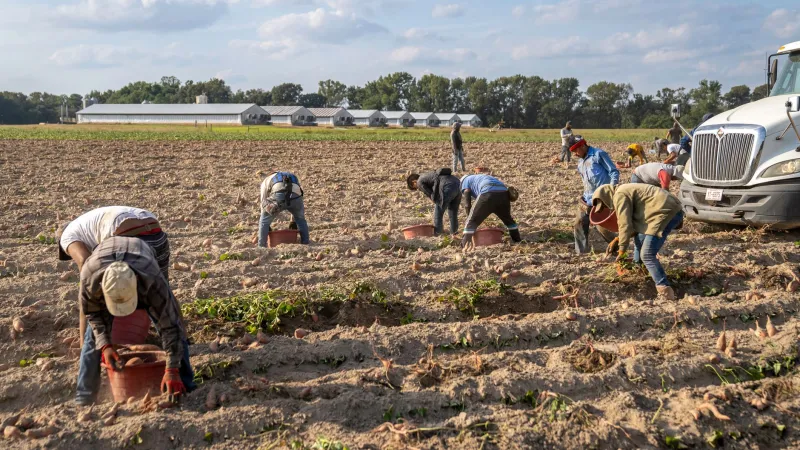
 Photo: Lunt Foundations, via finesentence.com
The Household as the Unit of Change
Consider the story of Marcus, a 34-year-old father of two from a mid-sized Midwestern city who enrolled in a construction trades training program supported by a regional community foundation. Before the program, Marcus was cycling through part-time retail positions, earning just enough to avoid eviction but never enough to feel stable. His children, ages seven and nine, were changing schools frequently as the family moved between apartments.
Eighteen months after completing the program and securing a full-time position with benefits, the picture looked dramatically different. The family had signed a two-year lease — their longest stretch of residential stability in five years. His older child's reading scores improved significantly once she was no longer navigating a new classroom every few months. Marcus enrolled both children in an after-school enrichment program he had previously been unable to afford. And for the first time, he scheduled a dental appointment for himself, something he had deferred for nearly a decade.
"It wasn't just about me having a job," Marcus said. "It changed what was possible for everyone in my house."
His story is not an outlier. Research from the Urban Institute and the Brookings Institution has consistently found that children in households where at least one adult moves from poverty-wage employment to a living wage demonstrate measurable improvements in academic performance, reduced absenteeism, and lower rates of behavioral challenges in school. The mechanism is partly financial, but it is also deeply psychological: stable households produce calmer, more focused children.
 Photo: Brookings Institution, via i.ytimg.com
 Photo: Urban Institute, via www.neverendingseason.com
Housing Stability as a Hidden Dividend
One of the most underappreciated downstream benefits of workforce investment is its effect on housing security. When program participants achieve sustained employment at living wages, families are far less likely to experience eviction or forced relocation — disruptions that carry enormous social costs.
A 2022 study examining participants in workforce programs funded through community development financial institutions found that households where an adult completed a credentialed skills training program were 41 percent less likely to report a housing disruption in the following three years compared to a control group. That stability, researchers noted, had compounding effects: children remained enrolled in the same schools, adults maintained consistent access to employer-sponsored health coverage, and families began building modest emergency savings for the first time.
For foundations evaluating where to direct their grant dollars, this data carries a pointed implication. Investing in workforce development is, simultaneously, an investment in housing stability, public health, and educational continuity — three areas that often receive separate funding streams with little coordination between them.
Health Outcomes: The Quiet Transformation
Americans who lack steady employment or who work in jobs without benefits consistently delay preventive healthcare, skip prescription medications, and rely on emergency rooms as their primary point of medical contact. The costs — to individuals, to families, and to the public health system — are staggering.
When workforce programs successfully connect participants to jobs that include employer-sponsored insurance, the behavioral shift is often immediate. Participants schedule preventive screenings. Children receive routine vaccinations on schedule. Adults managing chronic conditions like diabetes or hypertension gain consistent access to the medications and monitoring they need.
Program administrators at a workforce initiative in the Southeast reported that within 12 months of job placement, over 60 percent of participants who had previously relied on Medicaid emergency services had transitioned to employer-sponsored coverage and reported at least one preventive care visit. The downstream savings to state Medicaid systems, while difficult to attribute directly, represent a form of philanthropic return that rarely appears in traditional program evaluations.
Challenging Funders to Measure What Actually Matters
The philanthropic sector has long struggled with the tension between measurable outputs and meaningful outcomes. It is far easier to count job placements than to track a child's improved reading fluency three years after her father completed a welding certification. It is simpler to report training completions than to document the neighborhood-level economic stabilization that occurs when dozens of households within a single zip code simultaneously increase their earning power.
Yet if foundations are serious about community transformation — not just individual improvement — they must develop evaluation frameworks sophisticated enough to capture these second- and third-order effects. That means longer grant cycles that allow programs time to produce multigenerational data. It means investing in longitudinal research partnerships with universities and policy institutes. And it means resisting the pressure to declare success after a single cohort completes training and moves into employment.
Some of the most forward-thinking foundations in the country are already making this shift. They are embedding family stability assessments into their workforce program evaluations. They are tracking school enrollment data for children of participants. They are partnering with local housing authorities to monitor residential mobility among program graduates. The picture that emerges from this more comprehensive accounting is one of extraordinary leverage: a relatively modest investment in one adult's skills can reshape the trajectory of an entire family system.
The Neighborhood-Level Multiplier
Zoom out further, and the effects become even more striking. When workforce programs operate at meaningful scale within a defined geography — a neighborhood, a county, a city — the aggregate impact on local economic conditions can be substantial. Increased household income translates into greater spending at local businesses. Greater business revenue supports additional hiring. Additional hiring creates more opportunities for other residents to access stable employment. The cycle, once initiated, has genuine momentum.
Community development researchers refer to this phenomenon as the local economic multiplier, and workforce investment consistently demonstrates one of the strongest multiplier effects of any philanthropic intervention. Every dollar earned by a workforce program graduate who spends locally generates additional economic activity within the same community — a form of endogenous growth that no external subsidy can fully replicate.
A Fuller Accounting of Impact
The families who walk through the doors of workforce development programs are not simply job seekers. They are parents, caregivers, neighbors, and community members whose circumstances ripple outward in every direction. When foundations choose to invest in their economic mobility, they are not merely funding a training program — they are initiating a cascade of stability that reaches children who will grow up with greater opportunity, households that will weather future economic shocks with more resilience, and neighborhoods that will gradually reclaim their vitality.
Measuring that cascade is difficult. But failing to measure it risks dramatically undervaluing one of the most consequential investments a foundation can make. At Lunt Foundations, we remain committed to the work of building communities from the inside out — and to holding ourselves accountable to the full scope of what that work can achieve.