Rooted in Place: How Community Land Trusts Are Securing the Future of Small-Town America
A Foundation Beneath the Foundation
When most people think about affordable housing, they picture apartment complexes, rental vouchers, or urban redevelopment projects. What they rarely picture is a small nonprofit in rural Vermont quietly holding the deed to a parcel of land so that a working family can afford to own the home sitting on top of it — permanently. Yet that is precisely what community land trusts (CLTs) do, and they have been doing it with remarkable effectiveness for decades.
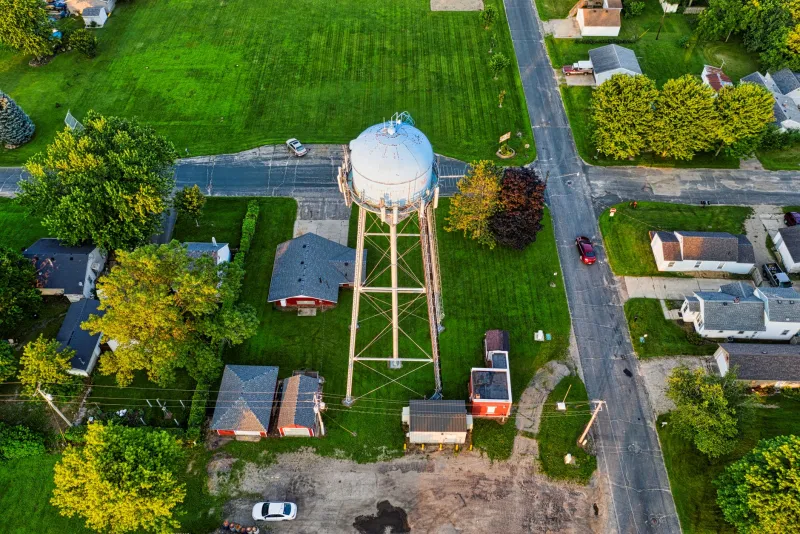
The model is elegant in its simplicity. A nonprofit organization acquires land and retains ownership of it indefinitely. Families purchase the homes on that land at below-market prices, entering into a long-term ground lease — typically 99 years — with the trust. When a homeowner eventually sells, a resale formula ensures the home remains affordable for the next buyer, while still allowing the departing family to build meaningful equity. The land, held in common, is never speculated upon. It remains a community asset.
For low- and moderate-income families in small towns and rural communities — places where wages have stagnated even as property values have climbed — this structure can mean the difference between putting down permanent roots and being quietly displaced by economic forces beyond their control.
The Geography of Displacement
Displacement is often discussed as a phenomenon of dense urban cores, but the pressures reshaping rural and small-town housing markets are equally disruptive, if less visible. In communities from the mountain towns of Colorado to the coastal villages of Maine, remote work migration, vacation home demand, and speculative land purchases have driven property values to levels that local wage earners simply cannot meet.
In Jackson, Wyoming, where the median home price has surpassed $1.5 million, the Teton County Housing Authority has worked alongside community land trust frameworks to preserve workforce housing for the teachers, nurses, and service workers who make the town function. In Vermont, Champlain Housing Trust — one of the oldest and largest CLTs in the country — has helped more than 600 families achieve homeownership at prices they can sustain, with a foreclosure rate dramatically lower than the national average even through periods of economic turbulence.
These are not isolated experiments. The National Community Land Trust Network estimates there are more than 225 CLTs operating across the United States, with a growing number explicitly focused on rural and small-town contexts where the institutional infrastructure for affordable housing has historically been thin.
Why Philanthropic Capital Is the Catalyst
Community land trusts do not emerge from nothing. They require patient, flexible capital to acquire land, establish governance structures, provide homebuyer education, and manage the ongoing stewardship responsibilities that make the model work. That is precisely where philanthropic foundations play an irreplaceable role.
Public funding for affordable housing — whether through federal programs like the Community Development Block Grant or state-level housing trust funds — tends to be project-specific, competitive, and constrained by political cycles. Philanthropic capital, by contrast, can fund the organizational capacity that makes a CLT viable over the long term. It can cover the cost of land acquisition in a fast-moving market, where timing matters and bureaucratic delays are not an option. It can support technical assistance for newly forming trusts in communities that have never attempted this kind of model before.
The Grounded Solutions Network, a national support organization for CLTs and shared-equity housing programs, has documented how foundation investment in land trust infrastructure yields compounding returns: each home preserved in perpetual affordability reduces the need for future intervention, creating what amounts to a permanent reduction in a community's housing cost burden.
For foundations committed to durable social impact — rather than outputs that dissolve when a grant period ends — there are few investments with a longer time horizon than land.
Housing Stability as Social Infrastructure
The case for community land trusts extends well beyond housing policy. Research consistently demonstrates that residential stability is a precondition for a wide range of positive outcomes across education, health, and civic life.
Children who move frequently due to housing instability are significantly more likely to experience disruptions in their schooling, fall behind academically, and disengage from extracurricular and community activities. Families in perpetual housing insecurity report higher rates of chronic stress, which carries measurable consequences for physical and mental health. And communities with high rates of transience struggle to build the social capital — the networks of trust, mutual obligation, and shared investment — that makes civic participation meaningful.
When a family owns a home in a community land trust, they are not just housed. They are anchored. Their children attend the same school year after year. They join the parent-teacher association, coach youth sports, and run for the school board. They become, in the fullest sense, members of a community rather than temporary residents passing through it.
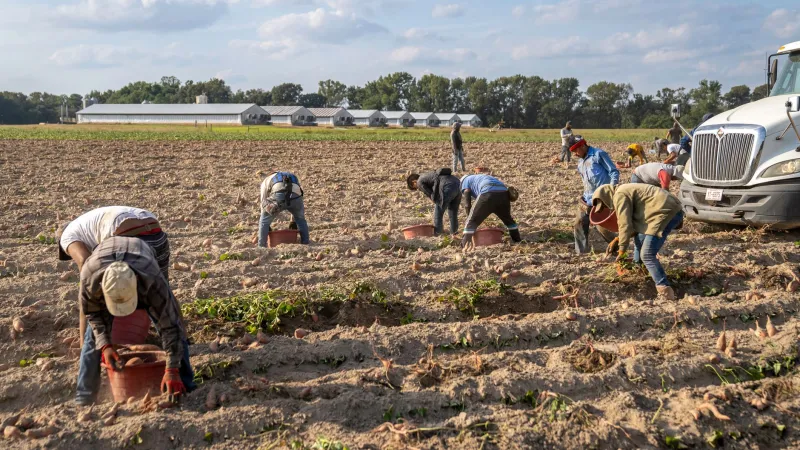
In Homestead, Florida, a CLT serving agricultural workers and their families has seen homeowners become leaders in local advocacy efforts, neighborhood associations, and small business development. In the rural Appalachian communities of eastern Kentucky, land trust models adapted to local land tenure traditions are helping families who have deep generational ties to a place finally formalize and protect those connections through legal homeownership.
Stewardship as a Long-Term Commitment
One of the most important — and most frequently underappreciated — aspects of the community land trust model is its emphasis on ongoing stewardship. CLTs do not simply sell homes and move on. They maintain relationships with homeowners, provide financial counseling, intervene early when families face hardship, and work proactively to prevent the foreclosures that erase wealth and destabilize neighborhoods.
This stewardship function is both a strength and a resource demand. It requires dedicated staff, robust systems, and sustained funding. Foundations that support CLTs must understand they are not funding a one-time transaction but an ongoing institutional commitment. The most effective philanthropic partnerships in this space treat CLTs as long-term grantees worthy of general operating support, not merely as vehicles for delivering a specific number of housing units within a grant cycle.
That kind of trust — between a foundation and the community organizations it supports — mirrors the trust at the heart of the CLT model itself. Both are built on the conviction that lasting change requires lasting investment.
Building Communities, One Parcel at a Time
The work of community land trusts does not make headlines the way that large urban redevelopment projects do. There are no ribbon cuttings at groundbreakings attended by mayors and senators. There are, instead, quiet closings at title companies in small county seats, where families sign papers and receive keys to homes they will be able to afford not just today but in twenty years — and that their children, if they choose, may be able to afford after them.
That quietness should not be mistaken for insignificance. In community after community across the United States, the cumulative effect of these transactions is a neighborhood that holds together, a tax base that remains viable, a school that retains its students, and a civic culture that has the stability to grow.
For foundations serious about community development — about building something that endures rather than something that merely demonstrates — community land trusts represent one of the most compelling opportunities available. The land does not depreciate. The affordability does not expire. And the families who are able to stay, because of the foresight of a foundation willing to invest in the ground beneath their feet, become the very people who carry a community forward.
That is not a quiet revolution. That is a foundation.