Hands That Build: Recovering the Repair Traditions That Strengthen American Communities
For most of the twentieth century, knowing how to fix things was not a hobby. It was a survival skill, a source of dignity, and a form of neighborhood currency. The man on Elm Street who could rewire a fuse box was a resource. The woman who could rebuild a carburetor was, in the most literal sense, invaluable. These skills moved through families, through apprenticeships, through the informal exchanges of people who lived close enough to one another to ask for help and to offer it in return.
That world has not entirely vanished, but it has contracted dramatically—and the consequences of its contraction are only beginning to receive the serious attention they deserve.
The Quiet Disappearance of Practical Knowledge
Over the past three decades, a confluence of forces has accelerated the erosion of hands-on repair competency in American communities. The decline of shop classes in public schools, driven by budget cuts and a cultural pivot toward college-preparatory curricula, removed a generation of young people from early exposure to tools and materials. The rise of disposable consumer goods—products engineered to be replaced rather than repaired—reduced the practical incentive for developing repair skills. And the consolidation of trades into licensed, credentialed professions, while necessary for safety in many contexts, created economic barriers that placed skilled labor beyond the reach of low-income households.
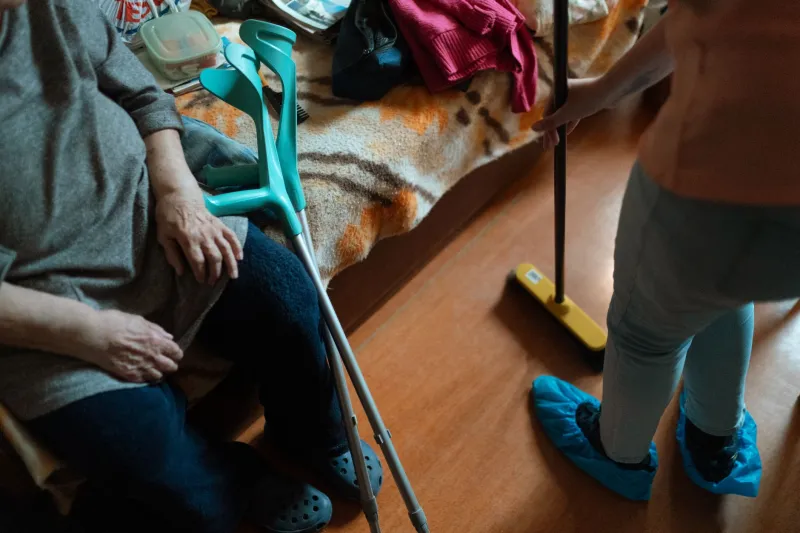
The result is a population that, in many communities, lacks the knowledge to address basic household maintenance needs—and pays dearly for that gap. A leaking pipe that a previous generation might have repaired over a weekend now requires a service call that costs several hundred dollars. A circuit breaker issue that once yielded to a neighbor's expertise now generates an electrician's invoice. For households operating on thin margins, these expenses are not inconveniences. They are crises.
Beyond the economic dimension, something less quantifiable has also been lost. The act of repairing a thing—understanding how it works, diagnosing what has failed, restoring its function—is a form of engagement with the material world that builds confidence, problem-solving capacity, and a relationship to one's environment that passive consumption cannot replicate. Communities that cannot fix what is broken are communities that must perpetually depend on others to do it for them.
What Forward-Thinking Foundations Are Funding
A growing number of philanthropic organizations across the United States are treating the decline of repair culture as a legitimate community development issue—and investing accordingly. The program models emerging from this work are diverse, locally tailored, and often remarkably cost-effective.
Tool libraries are among the most accessible entry points. Modeled on the public library concept, tool lending programs allow community members to borrow hand and power tools for household projects without the capital investment of ownership. For residents in apartments or those managing tight finances, access to a circular saw or a drain snake on loan can be the difference between completing a repair and deferring it indefinitely. Libraries in cities including Portland, Oregon; Columbus, Ohio; and Oakland, California have demonstrated that tool-lending programs generate high utilization rates and significant economic value for participating households. Foundations are funding both the startup costs of new programs and the operational sustainability of existing ones.
Repair cafes offer a different model—one that combines skill-sharing with community gathering. Originating in the Netherlands and now present in hundreds of American cities, repair cafes are organized events at which volunteer repair experts assist community members in fixing broken household items: lamps, clothing, bicycles, small appliances. The event format is deliberately social. Participants learn alongside skilled volunteers, ask questions, and leave with both a repaired object and a practical education. Foundations funding repair cafes report that the events consistently draw diverse, cross-generational attendance and serve as effective community connectors in neighborhoods where formal programming has struggled to achieve the same reach.
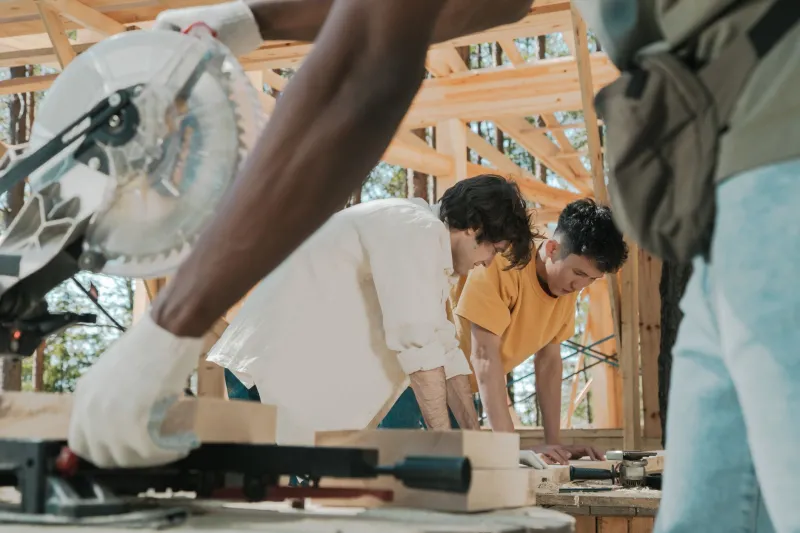
Trade apprenticeships and pre-apprenticeship programs address the deeper workforce dimension of the skills shortage. These programs—typically targeting young adults and career changers, with particular emphasis on populations historically excluded from the trades—provide structured pathways into plumbing, electrical work, carpentry, HVAC, and related fields. The economic case for philanthropic investment in this space is compelling: median wages in the skilled trades consistently exceed those available to workers with equivalent education in many service-sector occupations, and demand for qualified tradespeople is projected to grow substantially over the coming decade as the current workforce ages into retirement.
Foundations investing in pre-apprenticeship programs are also attending carefully to the access barriers that have historically limited participation by women, people of color, and individuals with prior system involvement. Wraparound supports—stipends, childcare, transportation assistance, mentorship—are increasingly treated as essential components of effective program design rather than optional add-ons.
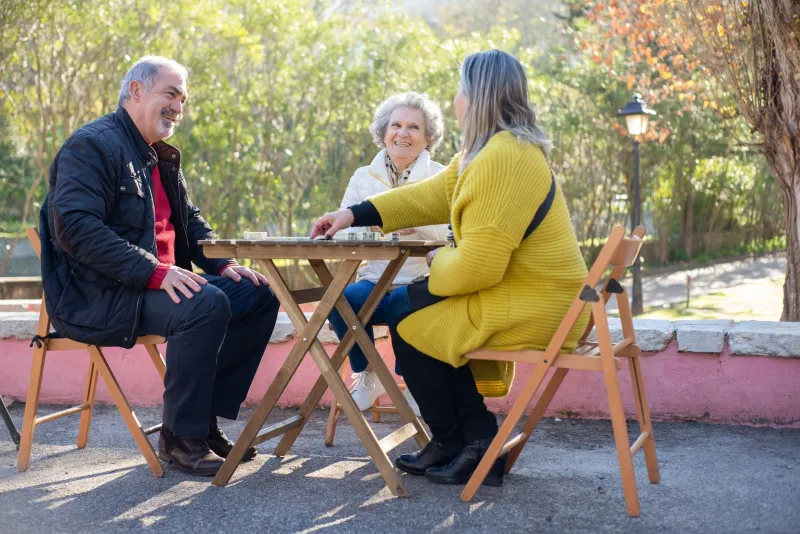
Intergenerational skill-sharing programs may represent the most culturally significant investment in this category. These initiatives create structured opportunities for older adults who possess traditional repair knowledge to transmit that knowledge to younger community members. The exchange is reciprocal: young participants gain practical competencies and relationships with experienced mentors, while older adults gain purpose, social connection, and the satisfaction of seeing their expertise valued and continued. Several community organizations have embedded these programs within senior centers, community colleges, and neighborhood associations—creating recurring occasions for cross-generational encounter that serve multiple community development goals simultaneously.
The Deeper Case for Philanthropic Investment
The argument for funding repair culture extends beyond workforce development and household economics, though both are legitimate and significant. At its core, this investment is about restoring a form of community self-sufficiency that market forces have steadily undermined.
Communities that can diagnose and address their own problems—whether those problems are a broken porch railing or a failing sump pump—are communities that have preserved a measure of agency over their own circumstances. That agency is not merely practical. It is psychological and social. It produces the kind of confidence that enables collective action, the kind of mutual reliance that builds lasting neighborhood bonds, and the kind of intergenerational continuity that sustains community identity across time.
Philanthropy has long understood that economic mobility requires more than income support. It requires the skills, networks, and self-efficacy that allow individuals and families to navigate a complex world with confidence. The repair traditions that once characterized American working communities embodied all three of those assets. Recovering them—through tool libraries, repair cafes, apprenticeships, and the patient transmission of knowledge from one generation to the next—is quiet work. It is also essential work.
The foundations investing in it are not romanticizing the past. They are building the future, one repaired object and one shared skill at a time.